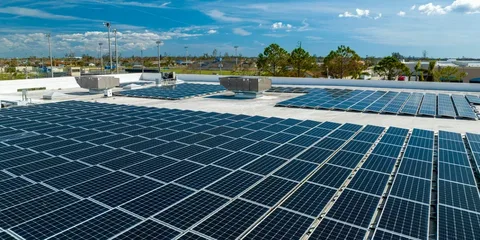
Industrial solar panel cleaning means cleaning and maintenance of large-scale solar energy systems (PV), which are at factories, utility-scale solar farms, or commercial rooftops, to maximize energy output, prolong panel life, and ensure return on investment.
Why Industrial Solar Panel Cleaning Matters
Industrial solar arrays are a great investment, but their large surface area makes them easy to get dirty with dust, bird droppings, pollen, and other things. A thin layer of dirt can cut down on how much electricity solar panels can make by a lot. Cleaning your solar panels on a regular basis, especially on a large scale, keeps your system running at its best all the time. Cleaning isn’t just about getting the most power; it’s also about protecting your investments, keeping your warranties, and lowering the risks of having to do more maintenance in the future.
How Industrial Solar Systems Differ From Residential Ones
There are a number of important ways that industrial systems are different from residential solar systems:
Scale: Large arrays, whether they are on the roof, the ground, or a tracker, have a lot more surface area to keep clean.
Risk of soiling: There is are greater chance of buildup from dust, industrial pollution, bird droppings, or agricultural particles.
Water logistics: Cleaning such large areas with water can use a lot of resources, so you need to keep track of the water supply, quality, and disposal.
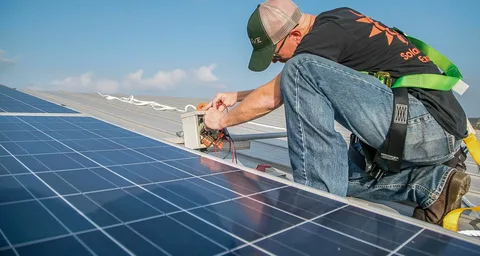
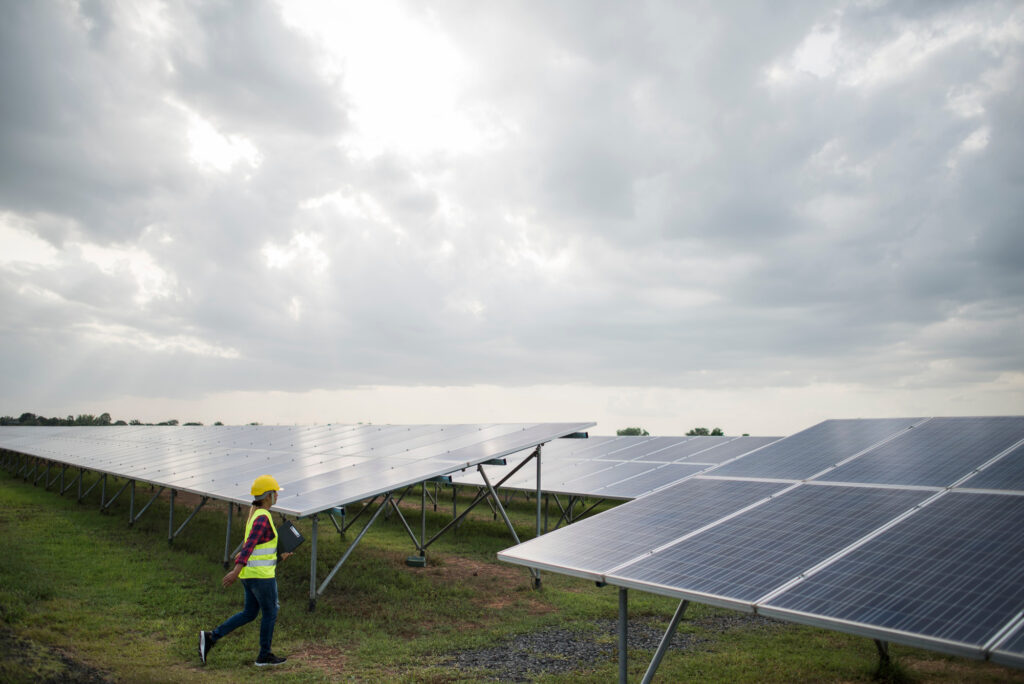
Access and safety: It can be difficult to reach big fields or rooftops. Workers need to be aware of risks related to height, shade, and electricity.
Performance guarantees or contracts: A lot of industrial solar projects work under power purchase agreements (PPAs) or performance guarantees. Dirty panels lower output and could put the terms of the contract at risk.
Why Industrial Solar Panel Cleaning Is Important
Cleaning is important for the following main reasons, particularly in industrial settings:
Increases in Energy Efficiency
- According to the situation, soiling can lower panel output by 5–20%.
- Even greater losses could occur from dirty panels that have a lot of dust or bird droppings on them.
Panel Longevity and Long-Term Asset Protection
- Particle accumulation can result in corrosion, microcracks, and hot spots.
- Untreated soiling can eventually cause irreversible harm.
ROI, or financial return
- Cleaner panels make more electricity, which boosts PPA income.
- Routine cleaning lowers the need for expensive repairs by finding damage early on.
Guarantee and Follow-Through
Many manufacturers require proof of regular maintenance, like cleaning, in order for warranties to stay valid.
Industrial Solar Panel Cleaning Techniques
There are many ways to clean solar panels on an industrial level. The best method depends on the size, location, availability of water, cost, and environmental rules.
Systems for cleaning by hand
These are still used a lot, especially on smaller industrial sites or rooftops.
What you usually do to clean by hand:
Pre-rinse: If you’re using water, wash with soft, low-pressure water.
Scrubbing gently: Use sponges, microfiber cloths, or soft brushes to scrub gently.
Cleaning solution: RO water or disinfected water; if necessary, use mild, biodegradable soap.
Final rinse: Carefully eliminate everything that remains
Drying: To prevent streaks, use rubber squeegees from top to bottom.
Pros / Cons:
| Pros | Cons |
| Inexpensive labor-wise (relative to big equipment) | Labor-intensive for large arrays |
| Flexible (can target dirty spots) | Risk of scratching or damaging panels if done improperly |
| Easy to inspect panels visually during cleaning | Water use can be high; logistics are difficult for remote or large sites |
Tips / Best Practices
- For less thermal shock, clean the panels early in the morning or late at night.
- Make use of soft, smooth tools.
- To avoid mineral residue, use RO or deionized water rather than hard water.
- Use fall protection harnesses if needed to ensure worker safety.
How Clean Panels Improve Performance
Enhanced energy yield: Sunlight capture is restored when soiling is removed.
Decreased risk of hot spots: Even soiling helps avoid micro-damage, which can reduce panel life.
Increased system availability: Regular, planned cleanings reduce poor performance.
Longer system life: Cleaner panels exhibit less corrosion, microcracks, and material deterioration.
Financial resilience: Future returns and payback periods are improved by increased production.
Protection under warranty: Clean, well-recorded maintenance backs up warranty claims.
Impact of Dirty Panels on Performance
Industrial, Commercial & Farm Solar Cleaning: Key Differences
Comparing the cleaning techniques used for commercial, industrial, and farm-scale solar systems is helpful.
Comparison Table
| Feature | Industrial Solar Cleaning | Commercial Solar Cleaning | Farm Solar Cleaning |
| Scale | Very large (megawatts) | Medium to large (warehouses, rooftops) | Ground-mounted, varied layouts |
| Soiling Risk | High, dust, pollution, and bird droppings | Moderate, urban or commercial debris | High, dust, agricultural particulates, chemicals |
| Water Use | Major logistic challenge | Moderate; easier access | Varies, may use water or dry methods |
| Cleaning Methods | Robotic, dry, manual | Manual + semi-automated | Manual, robotic, specialized (e.g., drone) |
Why These Differences Are Important
Cost effectiveness: Automation works better for bigger systems, like those used in factories.
Water Restrictions: Farms may be closed to irrigation systems because commercial rooftops may have direct access to water.
Access & Safety: Robots or drones are better for big fields like farms and factories, and commercial rooftops need to be protected from falls.
How often do solar panels need to be cleaned?
General Rules
Minimum: At least once a year for big business or industrial systems.
In places where the soil is very dirty: it might be better to do this two to four times a year.
Systems that work on their own: You can set up robots to run every day, every week, or as needed.
Cleaning based on performance: When output drops below a certain level (like a loss of more than 5%), use monitoring systems to start cleaning.
Signs You Need Cleaning Sooner:
- Significant drop in energy output (observed by system monitoring)
- Visible buildup of leaves, dust, and bird droppings
- After serious weather incidents (storms, dust storms)
- Seasonal events are pollen bloom, leaf fall, and nearby construction.
Choosing a Professional Solar Panel Cleaning Service
Large-scale solar installation cleaning is a challenging task. Safety, effectiveness, and long-term gain are guaranteed when the right professionals are hired.
What to Look For:
- A checklist for selecting an experienced solar panel cleaning company is as follows
- Industrial/commercial experience: They need to have worked with large photovoltaic systems before.
- Safety credentials include electrical safety rules, fall protection, and OSHA training.
- Use of RO/deionized water, low-pressure methods, and water-saving strategies are examples of water management abilities.
- Access to dry-clean systems, robots, or both is are example of modern cleaning technology.
- Inspection and reporting: complete post-clean reports (performance anomalies, microcracks, panel condition).
- Local knowledge: Aware of local climate issues, such as pollen, snow in Minnesota, and shortages of water.
- Certification and insurance: professional certifications, workers’ compensation, and liability coverage.
- Performance-based contract: Cleaning options based on performance guarantees or production metrics.
The Future of Solar Panel Cleaning
Emerging Technologies & Trends
The following are the key innovations that will affect industrial solar panel cleaning in the future.
- Self-drones (UAVs) have blowers, sprayers, or brushes for systems that are hard to access.
- AI and sensor-based cleaning triggers: AI-powered systems that find dust and bird droppings and make cleaning schedules better.
- Robots that use brushes, microfiber rollers, or electrostatic mechanisms to clean without the use of water are known as waterless robotic systems.
- Nanotechnology and self-cleaning coatings: coatings that use high-energy waves to get rid of dust and keep things from getting harmed.
FAQ
Q1. Why is solar panel cleaning important for industrial systems?
Industrial systems cover huge regions, so even small failures add up. Cleaning makes sure maximum energy generation, maintains system health, and helps meet contract or warranty conditions.
Q2. When should industrial solar panels be cleaned?
The minimum is usually once a year, but in dusty or highly soiling environments, 2 to 4 times a year may be needed. Automated systems could be working more frequently depending on the soiling patterns.
Q3. Can I do my own solar panel cleaning?
Yes, for residential or small systems. But expert cleaning guarantees safety, correct technique, and avoids warranty problems for industrial-scale arrays.
Conclusion
To get the maximum benefit from an industrial-level solar panel, it is necessary to clean it in a timely manner. If you clean them timely, it will protect them, their efficiency increases, and you get the full benefit from your solar infrastructure.
Here is a small plan of action:
- When evaluating your cleaning needs, take scale, location, and soiling risk into consideration.
- For your operation, select the right method (waterless, robotic, or manual).
- Make a cleaning schedule that aligns with the monitoring of your system.
- Employ a reliable, qualified cleaning service, especially one with local and industrial experience.
- To calculate ROI and improve your strategy, track performance both before and after cleaning.
In addition to increasing system output, being proactive and strategic will protect your warranties, increase the life of your panels, and position you for long-term success.